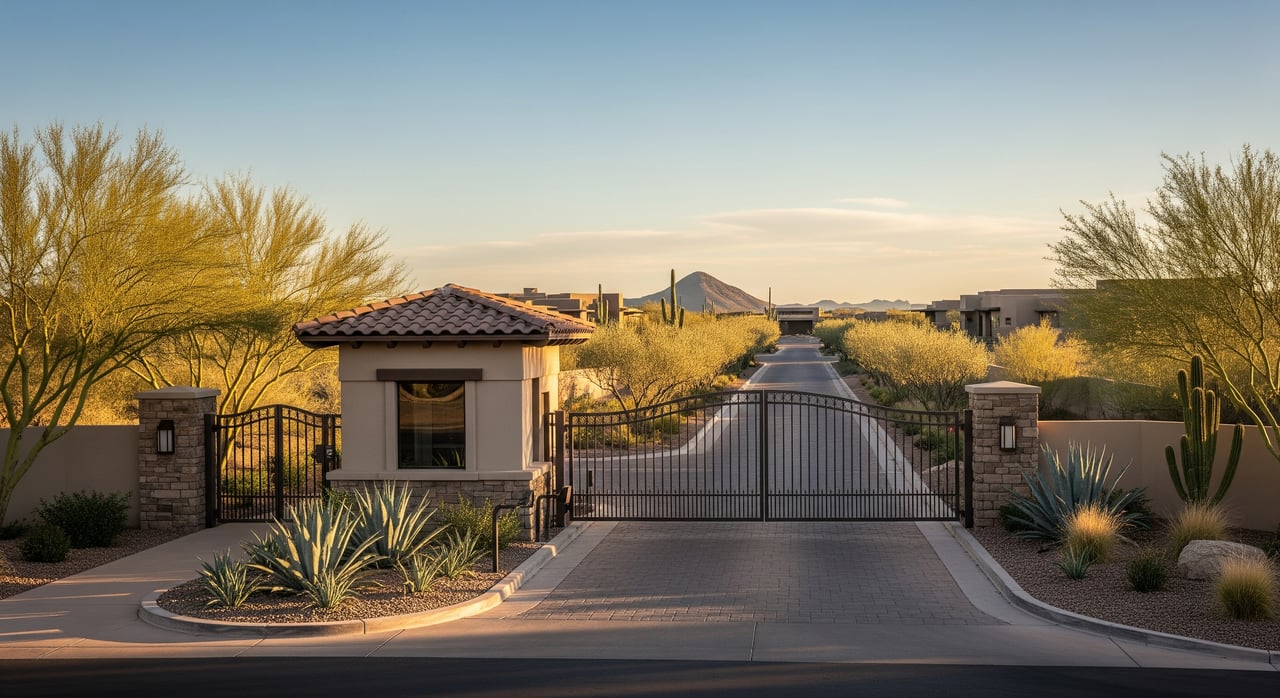
Considering a gated home in DC Ranch? You are not alone. Gated living in North Scottsdale appeals for privacy, consistency, and a curated neighborhood feel. Still, “gated” in DC Ranch can mean different things depending on the village or sub‑HOA. In this guide, you will learn how gates work here, how HOAs are structured, what amenities and rules to expect, and what to review before you buy. Let’s dive in.
What “gated” means in DC Ranch
DC Ranch is a master‑planned community made up of multiple villages, neighborhoods, and sub‑associations. The master association handles communitywide items, while villages and sub‑HOAs set many day‑to‑day rules and services. That includes how gates operate.
“Gated” can refer to several setups:
- Manned guard gates at neighborhood entrances.
- Automated vehicle gates with remotes, key cards, codes, or license‑plate recognition.
- Pedestrian gates for trails, pools, or small enclaves.
- Private gated pockets inside a larger open village.
Policies are not uniform across DC Ranch. Each village or sub‑HOA decides how access is controlled, how visitors are processed, and what equipment is used. Note that DC Ranch is separate from neighboring luxury areas like Silverleaf. They are distinct legal entities with different HOA systems.
How access and visitors work
Guarded vs automated gates
Some villages fund staffed gatehouses where guards verify IDs, manage guest lists, and log entries. Others use automated systems that rely on resident devices and guest intercoms. The cost and convenience vary with each approach and are reflected in dues.
Guests, deliveries, and contractors
Visitor and delivery rules differ by village. Some allow direct entry for deliveries or rideshare once authorized by you. Others require pickup at a gatehouse or remote authorization for each visit. Contractor access often requires pre‑registration and may involve proof of insurance or deposits.
Package delivery may be affected by gate setup. Many villages use designated delivery zones or coordinate with guards. Ask how USPS, UPS, FedEx, and couriers are handled where you plan to buy.
Who maintains the gates and pays
Gate ownership and maintenance can sit with the master association, a village or sub‑HOA, or a private enclave. This affects budgets and future costs. Confirm who is responsible for installation, ongoing maintenance, and eventual replacement, and whether reserves are set aside for capital needs.
Security expectations
Gates offer controlled access and a meaningful deterrent, but they do not guarantee security. Villages choose different layers, such as cameras, lighting, patrols, or staffed gates. These choices impact dues and overall experience. Set expectations around privacy and access control rather than absolute protection.
HOA structure and dues
Layered governance
DC Ranch uses a layered model. The master association manages communitywide infrastructure, major amenities, trails, some landscaping, signage, and events. Villages and sub‑HOAs handle local rules, gate operations, and neighborhood amenities. Some neighborhoods operate as separate condo or townhome associations.
CC&Rs and design review
Covenants, Conditions and Restrictions (CC&Rs) and architectural guidelines shape exterior decisions. Architectural Review Committees approve changes like paint colors, landscape modifications, pools, fences, and solar installations. Processes and timelines vary by village. Plan ahead for applications.
Dues, reserves, and assessments
Expect two layers of assessments: master association dues and village or sub‑HOA dues. Staffing gates, maintaining equipment, and operating village amenities increase costs. Review budgets, reserve studies, and recent financials to assess funding strength. If reserves fall short for major projects like gate replacement, associations may levy special assessments.
Amenities and lifestyle
Typical amenities
DC Ranch commonly offers community centers, walking and jogging trails, parks, playgrounds, tennis or pickleball courts, village pools, and planned social events. Some villages include private pools, neighborhood parks, or shared courtyards.
Access rules and guests
Amenity access typically requires resident IDs, amenity cards, or guest passes. Guest limits, reservations, age rules, and event fees may apply. Check the details if you plan to host gatherings or need frequent guest access.
Lifestyle tradeoffs
Benefits include consistent neighborhood standards, maintained common areas, recreational amenities, social opportunities, and controlled access. Tradeoffs include monthly or quarterly dues, rules about exterior changes, potential rental limits, pet controls, and possible special assessments.
Village variations to compare
Each village or sub‑HOA negotiates its own service level and rules. Expect meaningful differences. Compare the following when you tour:
- Gate type and staffing schedule.
- Visitor, delivery, and vendor procedures.
- Amenity scope and any reservation rules.
- Parking and guest pass policies.
- Pet rules, including size or breed limits.
- Rental policies and lease minimums.
- Architectural approval timelines and fees.
- Landscaping obligations and easements for your lot.
Buyer due diligence checklist
Before you write an offer, or during the inspection period, gather and review:
- Current CC&Rs, bylaws, rules and regulations, and architectural guidelines.
- HOA meeting minutes for the past 12 to 24 months.
- Current budget, recent financial statements, and the latest reserve study.
- Assessment schedules and history of special assessments.
- Resale certificate or estoppel showing dues status, fines, and any pending assessments.
- Association insurance policies to confirm what you must insure personally.
- Vendor lists and active contracts for security, landscaping, and pools.
- Pending litigation disclosures and claim history.
Ask these key questions:
- Who controls and pays for gate maintenance and staffing?
- How are guests, deliveries, and contractors authorized? Are there parking passes or guest limits?
- What do master and village dues cover today, and are increases planned?
- What are the rental rules and lease minimums? Are short‑term rentals allowed?
- What are the rules for exterior changes, solar, and landscape updates?
- Have there been recent or planned special assessments? Why?
- Is the association warrantable for conventional financing? Any known lender issues?
- Do any memberships, parking, or storage rights transfer with the home?
- Are there easements or shared maintenance obligations that affect the lot?
Watch for red flags:
- Low reserves and signs of deferred maintenance.
- Significant pending litigation.
- High dues delinquencies.
- Restrictive rental policies if you plan to lease the home.
- Vague or cumbersome gate procedures that complicate daily life.
Lending and insurance basics
Financing and warrantability
Lenders evaluate the association’s financial health, reserve funding, and litigation. If an HOA does not meet program criteria, some loans may classify it as non‑warrantable. Share HOA documents with your lender early to avoid surprises.
What owners typically insure
Associations usually carry master property and liability coverage for common areas. You still need a policy that fits your property type and the governing documents. In some cases, you may be responsible for private structures like courtyard walls. Confirm coverage before binding your policy.
Shop smart in DC Ranch
- Verify gate access during showings. Test the guest procedure and confirm which remotes, fobs, or plates will transfer with the sale.
- Confirm exactly which amenities and parking privileges transfer and which require separate fees.
- Read recent board minutes to understand culture, projects, and enforcement trends.
- If you are seasonal, ask about part‑time occupancy rules and guest access when you are away.
- Coordinate early with a lender who understands Scottsdale and Maricopa County HOAs.
Bottom line
In DC Ranch, “gated” is a spectrum. The experience depends on your village or sub‑HOA’s rules, staffing, amenities, and financials. Do your document review, verify access procedures, and confirm lender acceptance early. With the right preparation, you can enjoy the privacy, amenities, and consistency that make DC Ranch living attractive.
When you are ready to evaluate specific villages, compare dues and reserves, and navigate the details, connect with The Matchett Group for a precise, high‑touch approach.
FAQs
What does a manned gate mean in DC Ranch?
- A manned gate is a staffed entrance where guards verify identities, manage guest lists, and control access based on village or sub‑HOA policies.
Are short‑term rentals allowed in DC Ranch gated areas?
- Policies vary by village and sub‑HOA, and many communities restrict or prohibit short‑term rentals, so you should confirm rules and lease minimums in writing.
How do HOA dues work for gated villages in DC Ranch?
- You typically pay master association dues plus village or sub‑HOA dues that cover local services like gate operations, security equipment, and neighborhood amenities.
Will packages be delivered behind the gate in DC Ranch?
- Delivery procedures differ by village, with some allowing direct access for couriers and others using designated delivery zones or guardhouse pickup.
Do gates guarantee security in DC Ranch?
- Gates provide controlled access and a deterrent, but they do not guarantee safety, and security levels and features vary by village and budget.