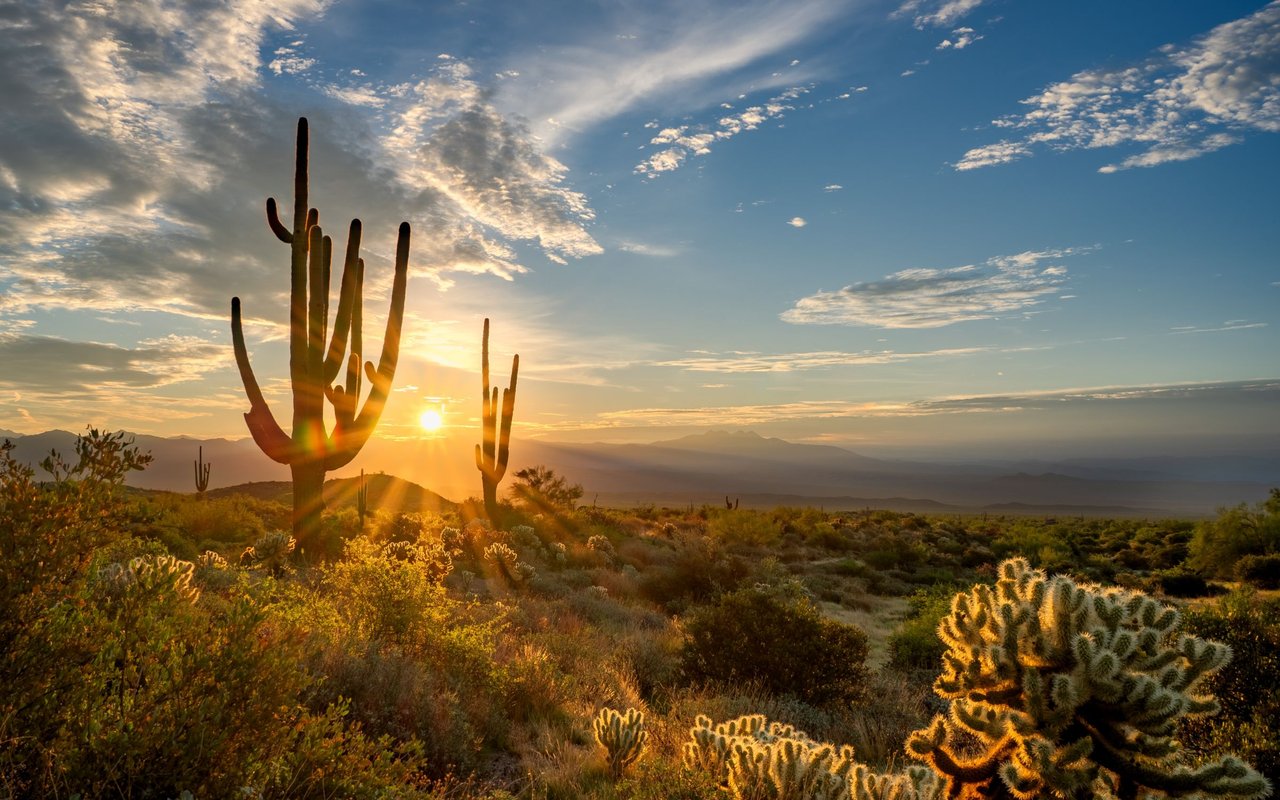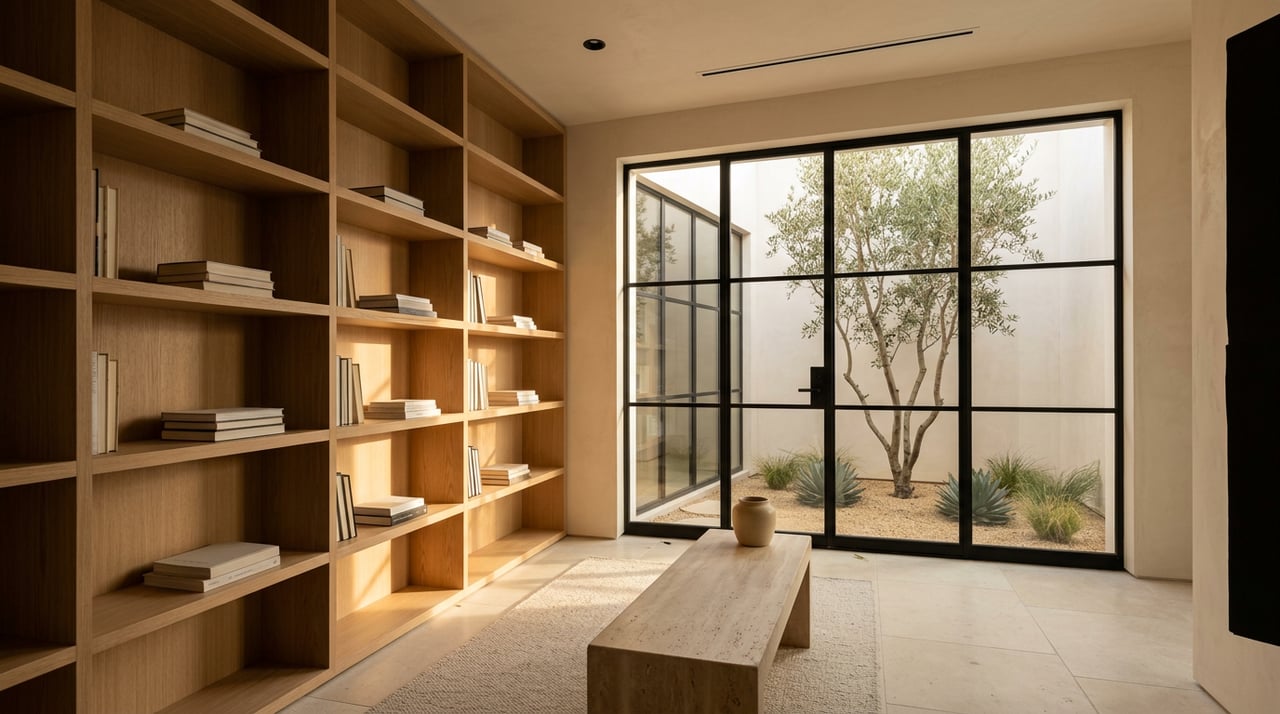
Two buyers write nearly identical offers on nearly identical Arcadia ranch homes a block apart. Same lot size, same year built, same tree canopy. One closes on schedule. The other renegotiates twice, loses a week to a surveyor, and ends up with a pool design that has been pushed nine feet north of where the architect first drew it.
The difference between those two escrows is almost never the house. It is what the Salt River Project delivers to the curb, how it gets from the curb onto the lot, and what the recorded easement says about the ground in between.
The Thesis
Arcadia's tree canopy is the visible half of a transaction. The invisible half is an obligation, and sometimes an easement, that runs with the land. Buyers who treat flood irrigation as a landscaping amenity mis-price it. Sellers who treat it as an incidental line on the utility bill under-disclose it. Both mistakes surface in the same place, which is the two weeks between inspection and close.
The Arcadia market is stable enough right now to punish sloppy diligence. Redfin's neighborhood data put the March 2026 median sale price at $1.5M with homes sitting an average of 75 days on market, while Arcadia Lite ran $1.4M at $636 per square foot. Compass and Russ Lyon Sotheby's, according to a May 2026 Luxury Playbook read on Phoenix, track Arcadia near $1.45M and call it the city's most stable high-end submarket. A stable submarket is one where mistakes do not get papered over by 12% annual appreciation. The friction has to be handled, not outrun.
What "Flood Irrigation" Actually Means Once You Are Under Contract
Most irrigation water originates from SRP's 13,000-square-mile watershed, and SRP controls the delivery of nearly 800,000 acre-feet a year through 131 miles of canals and 1,000 miles of laterals and ditches, with employees called zanjeros directing water to the highest point of a neighborhood. That is the upstream half of the system. The half that matters at closing is where SRP's responsibility ends and yours begins.
SRP brings water to the SRP delivery gate; from that gate on, it is the owner's responsibility to install, operate and maintain the neighborhood irrigation system that carries water to each property. That single sentence is the entire disclosure conversation compressed. The gate is a fact of infrastructure. Everything past it is a fact of ownership.
Two operational details set expectations for anyone budgeting first-year carrying costs. SRP schedules residential subdivision deliveries approximately every 14 days during the summer and every 28 days during the winter, except during the annual canal maintenance period. Subdivision accounts receive 18 irrigation runs per year on a predetermined delivery day, with an eight-hour rotation moving each property's start time through morning, afternoon and middle of the night across the year. That last point is worth reading twice. Water can arrive at 2:47 a.m. on a Tuesday in July. The berms and turnout have to work whether the owner is home or not.
The Two Account Structures That Price Differently
Not every Arcadia lot is on the same footing with SRP, and this is where the block-to-block variation in 85018 stops being cosmetic. Properties of 1.25 acres or more have a Water Balance account, which allows the owner to order water within an allotment determined by property size and water rights and to request a specific delivery date and time, though not guaranteed; landowners with less than 1.25 acres are unable to have a Water Balance account. Above that acreage threshold, a buyer inherits scheduling flexibility. Below it, they inherit a rotation.
On rate structure, SRP's published 2027 schedule sets the basic Stored and Developed Water charge at $56.16 per acre for the first and second acre-feet, with additional acre-feet at $19.00, per the SRP water charges summary. As a water rights landowner within SRP's service territory, you do not pay for the water itself, because it belongs to the land; the annual basic charge instead funds water storage and the construction, operation and maintenance of SRP facilities such as canals and laterals. The distinction matters because a buyer who understands it does not confuse a low unit rate with a low true cost of ownership.
Why The Easement Matters More Than The Bill
The number that changes a deal is almost never the SRP invoice. It is the shape of the recorded easement across the parcel.
The Arizona Canal forms Arcadia's north boundary and feeds historic neighborhood irrigation systems that many properties still use; SRP manages the canal system and performs inspections and dry-ups, which requires clear access across its easements. Access easements do not politely limit themselves to the ditch line. They can cut across a rear yard, run alongside a driveway, or stripe the corner where the pool contractor intended to sink a spa.
The practical constraints are concrete:
- Many SRP easements prohibit buildings or pools inside the easement area, and even shallow work like footings, grade changes and hardscape can be limited.
- Many Arcadia lots also rely on neighborhood irrigation systems and private laterals that can be separate from SRP, so membership, schedules and maintenance responsibility may sit with the Arcadia Water Company or a neighborhood group rather than SRP itself.
- A lot's headgate typically sits in a metal or concrete box near the curb or property edge; from there water can move through open swales, shallow earthen channels or PVC pipes, with drainage swales, french drains or storm inlets carrying excess water off the lot.
For a buyer with a build or remodel program, the easement is the drawing that governs what the architect can actually deliver. For a seller, an unlocated or blanket easement on the preliminary title report is the single most reliable way to lose a buyer in day nine of the inspection period.
The Disclosure Question Sellers Get Wrong
Arizona is not a caveat-emptor state. Under Arizona common law and ARS 33-422, sellers have a duty to disclose all material facts that could affect the value or desirability of the property. That duty is not satisfied by writing "flood irrigated yard" on the MLS and calling it charm.
The state's default disclosure vehicle is the Arizona Association of Realtors SPDS, and its Utilities section explicitly asks about irrigation. The doctrinal backstop is older and firmer. The court in Hill v. Jones concluded that nondisclosure of material property defects can be equated with fraud or misrepresentation when the facts are known to the seller but not reasonably capable of being known to the buyer, and the seller is obligated to make the required disclosures regardless of whether the property is being sold "As Is."
Applied to an Arcadia listing, that means the disclosure package should carry the SRP account number, recent statements, the location of the turnout, any shared-turnout coordination arrangement with neighbors, and a plain description of the easement lines as they appear on title. A seller who documents the system converts a source of buyer anxiety into a source of buyer confidence. A seller who does not is negotiating against themselves during the inspection period, whether they realize it or not.
What This Does To The $1.5M Median
The headline number for Arcadia in early 2026 was a $1.5M median with days on market at 75. That figure is the average of two different buyer experiences. The first is a well-documented, mid-block lot with a clean turnout, current SRP statements and a survey that shows the easement clear of the house, pool and future ADU footprint. Those transactions close at or near list. The second is a lot where the turnout sits in a shared box with three neighbors, the easement clips a corner of the rear yard the buyer wanted for a spa, and no one has SRP statements from before 2023. Those transactions close after a price concession, a repair credit, or both.
The premium a buyer pays for Arcadia is partly a premium for the tree canopy that flood irrigation makes possible. It is also a premium for an obligation that requires ongoing berm and grading maintenance, filter cleaning, occasional soil salinity testing, and coordination with neighbors on shared laterals. Priced correctly, the obligation is worth carrying because the microclimate and lot character are difficult to replicate. Priced incorrectly, it is the reason a home that should have appraised at $1.55M closed at $1.47M.
A Pre-Offer Checklist Worth Running Before You Write The Number
- Pull the parcel from the Maricopa County Recorder and read every recorded easement and plat, not just the title company's summary.
- Order the preliminary title commitment and ask for document copies of each Schedule B exception.
- Order an ALTA/NSPS survey or an updated plot plan showing easement lines against the current improvements and any planned additions.
- Ask the seller for the SRP account number, the last several years of statements, and confirmation the account is current and transferable with the parcel.
- Confirm whether the lot is on a subdivision account or a water balance account, and whether it sits inside a neighborhood irrigation organization such as the Arcadia Water Company.
- Walk the yard on a delivery week if the calendar allows, and inspect berms, swales, the headgate box and any drainage inlets for standing water, erosion or salt crusting.
That list is not exhaustive. It is the version that keeps a $1.5M offer from becoming a $1.42M close.
FAQ
Does every Arcadia lot have flood irrigation? No. Delivery is parcel-specific and account-specific, and some historic turnouts have been decommissioned over time. Verification is a title, survey and SRP account exercise, not an assumption from the street.
Can flood irrigation be converted to drip on the same lot? Sometimes, and rarely cheaply. Conversion typically involves grading changes, new pressurized lines, backflow prevention, plant replacement, and coordination with SRP and the City of Phoenix on any decommissioning of the turnout. Budget it as a capital project, not a landscaping upgrade.
What if the water arrives at 3 a.m.? It will, at least some weeks. The system operates 24 hours a day, seven days a week including holidays, and rotates start times through the year. A property with sound berms, a working headgate and clean drainage handles a middle-of-the-night delivery without an owner present. A property without those does not.
Working With The Matchett Group
Arcadia rewards diligence and punishes assumption, and the flood irrigation question is one of the clearest examples in the Valley. If you are considering a purchase, preparing a listing, or weighing a lot for a build in 85018, The Matchett Group can coordinate the title, survey, SRP and inspection work that keeps the transaction on its intended number. Schedule a Free Consultation to walk through your specific parcel before the offer, not after it.