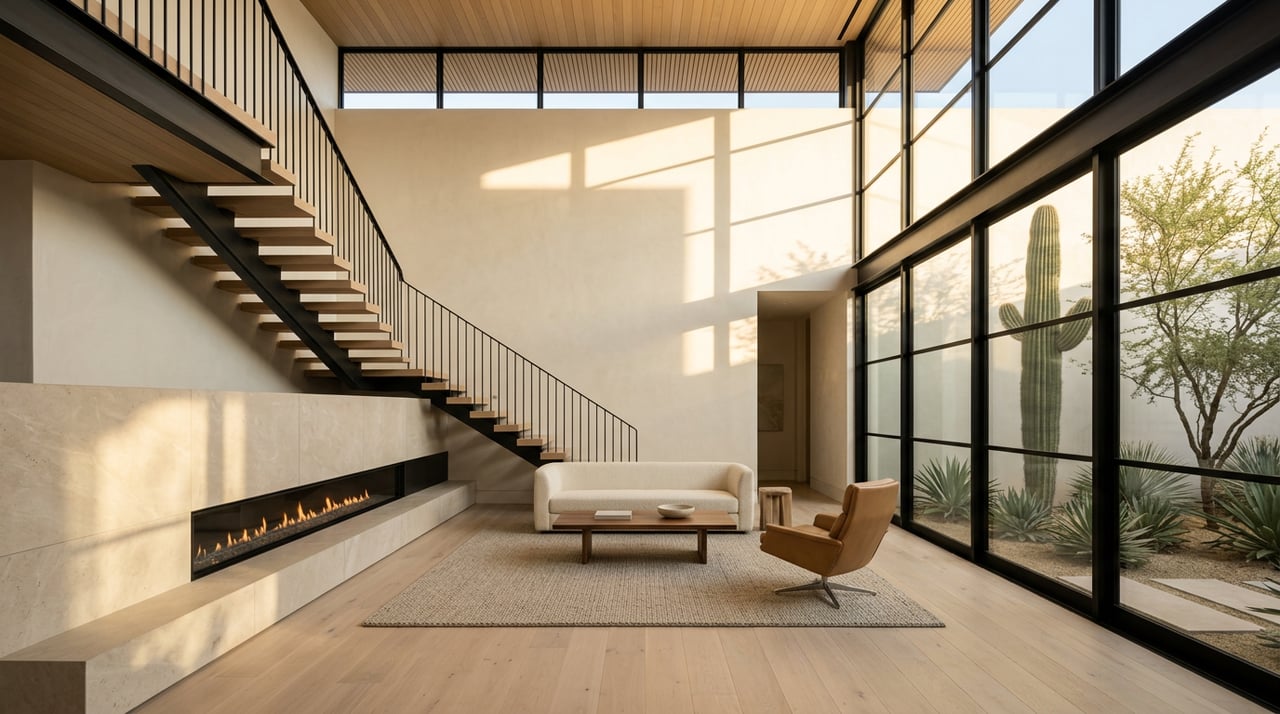
If you are preparing to sell a high‑end Scottsdale home, pricing is your most important early decision. You want a number that attracts serious buyers without leaving money on the table. The right strategy blends fresh market data, careful comparison to true peers, and presentation that signals value. In this guide, you will learn how top agents price luxury listings in Scottsdale today, how market supply shapes negotiation power, and how to set up your launch for success. Let’s dive in.
Scottsdale market at a glance
As of February 19, 2026, a local Cromford‑based snapshot reported Scottsdale single‑family homes at roughly 4.8 months of supply and a median monthly sold price near $1.25 million. Different public sources show different medians based on which sales they include and how they define the city. Some city trackers placed recent medians closer to the high $800,000s to just under $1 million in late January to February. For pricing a luxury home, treat those city medians as context and focus on your price band and neighborhood, which often sit well above citywide figures.
Why these signals matter: months of supply around 4 to 5 points to a market with buyer choice and selective behavior. In this environment, accurate pricing and best‑in‑class presentation do more of the heavy lifting. Luxury segments can also behave differently from the broader market because of lower turnover and a higher share of cash or jumbo financing. Your pricing should reflect conditions within your exact price tier and micro‑area.
How to price a luxury home
Define your competitive set
Start with product type and price band, not just zip code. If your home is a custom estate with privacy and views in North Scottsdale, your truest peers may be in gated or golf communities with similar amenities. Think in terms of Silverleaf, DC Ranch, Desert Mountain, Mirabel, or Troon North when relevant. If there are not enough recent sales, expand the radius while staying strict on like‑for‑like features.
Weight recent closed sales first
Closed sales carry the most weight because they reflect what buyers actually paid. Aim for comparable sales from the last 3 to 6 months when available. For ultra‑luxury or slower segments, appraisers and lenders may accept older comps with clear time adjustments and written justification, which is standard practice supported by appraisal guidance. See how national guidance frames comp age and time adjustments in Fannie Mae’s appraisal FAQs.
Focus on true comparables
Use at least three high‑quality closed comps, then layer in pending and active listings for momentum and competition. Adjust for value drivers that move luxury prices: lot size and setting, mountain or golf views, privacy, orientation, build quality and age, floor plan flow, guest houses or casitas, outdoor kitchens, pools and spas, technology systems, and membership or gate features. For a clear explanation of how professionals select and adjust comps, review this guide on comparable selection and analysis.
Go beyond price per square foot
Price per square foot is a quick cross‑check, not a pricing strategy. In luxury, finishes, architecture, outdoor living, and views often drive value more than raw size. A smaller, perfectly sited and curated home can command a higher price per square foot than a larger but less special property. Use $/sqft as one lens alongside feature‑based adjustments and recent closed evidence.
Convert findings into a price range
Your analysis should yield a probable range with clear trade‑offs:
- Price‑to‑net: conservative list price to prioritize speed and certainty.
- Market‑centered: priced at a believable market level to maximize qualified traffic.
- Aspirational: a higher ask to test demand, supported by exceptional marketing and strong agent networks.
Document your rationale with side‑by‑side comps and adjustments. The goal is to align your launch price with your timing and net priorities.
Presentation that protects price
Luxury buyers expect top‑tier presentation. Strong media and merchandising increase qualified traffic and can shorten days on market. Industry research reports that staging often reduces time on market and many agents see higher dollar offers after staging. You can review findings in NAR’s profile on staging benefits. Listings with immersive media also tend to attract more engaged buyers. Vendor studies show that 3D tours are associated with faster sales and increased qualified interest, as summarized in Matterport’s real estate media statistics.
Consider these practical tiers for Scottsdale estates:
- Basic readiness: declutter, deep clean, light repairs, landscaping refresh, professional photography, accurate floor plan. Purpose: avoid appearing neglected and enter the market cleanly.
- Enhanced marketing: full professional photography plus twilight, drone for views or acreage, a 3D tour, a high‑quality property brochure, targeted digital distribution, and outreach to luxury and broker networks. Purpose: meet luxury buyer expectations and widen reach.
- Bespoke campaign: all of the above plus professional staging, a cinematic property film, a dedicated property microsite, curated broker events, international luxury syndication, and concierge‑level showing management. Purpose: deliver premium exposure that supports an aspirational price.
Small, targeted upgrades can offer strong ROI in the luxury tier. Fresh paint, updated lighting, landscape tuning, and partial staging can neutralize common buyer objections. The goal is simple: make the value obvious online and in person.
Use absorption and timing to your advantage
Months of inventory is a simple ratio that helps you read leverage: active listings divided by average monthly closed sales. If your price band and area show about 4 to 5 months of supply, buyers have options and will screen listings quickly. In that climate, the best priced and best presented homes win early.
Your first two weeks are critical. New listings receive the most online visibility on day one and sustained interest in weeks one and two. If you do not see strong activity quickly, discuss a decisive price or presentation correction with your agent. Industry guidance highlights how early pricing missteps increase days on market and the need for reductions, which hurts final proceeds. For a clear discussion of timing and price‑cut strategy, see this market perspective on pricing and days on market.
When you need to adjust, act once and with purpose. Multiple small cuts tend to signal distress and can reduce negotiating power. A single, well‑supported correction can re‑engage qualified buyers and reset expectations.
Your step‑by‑step pricing playbook
- Confirm your market snapshot.
- Note current months of supply and median context for Scottsdale, then pull the same metrics for your exact price tier and neighborhood.
- Build a precision CMA for luxury.
- Select three to five closed comps with close similarity on lot, views, build quality, and amenities.
- Use pending sales to read momentum and actives to understand your competition.
- Apply time and feature adjustments, following appraisal conventions and documentation standards supported by Fannie Mae’s appraisal FAQs and this comparable selection guide.
- Choose your launch strategy.
- Pick price‑to‑net, market‑centered, or aspirational based on your timing and risk tolerance.
- Align concessions, occupancy, and showing plan with your target buyer profile.
- Execute a presentation plan.
- At minimum: professional photography and floor plan.
- For most Scottsdale luxury: add twilight, drone, and a 3D tour to widen reach and screen buyers.
- For ultra‑luxury: consider staging, a property film, and a microsite to support premium pricing. Review NAR staging insights and 3D tour engagement data as you decide.
- Monitor the first two weeks.
- Track showings, inquiries, and feedback daily.
- If traffic or offers lag, adjust quickly. A timely correction protects final net.
If speed is your top priority
When timing matters most, use a price‑to‑net strategy. List at a level that reflects current absorption and your must‑hit proceeds, and be prepared to accept a strong early offer. You can sweeten the deal with flexible closing, a credit for a rate buydown, or inclusion of select non‑realty items with proper documentation. The aim is to compress time on market while protecting your bottom line.
Work with a Scottsdale expert
Pricing a luxury home in Scottsdale is both math and nuance. You want a disciplined CMA, a launch plan built for your price band, and a marketing platform that reaches qualified buyers fast. If you would like a confidential, address‑specific valuation and launch plan for your property, connect with The Matchett Group to get started.
FAQs
How do you define luxury in Scottsdale?
- In practice, luxury often means the top 5 to 10 percent of closed prices or a floor around $1 million to $2 million depending on the neighborhood and property type. Your micro‑market and features will set the true threshold.
Why not list higher to leave room to negotiate?
- Overpricing usually increases days on market and invites price cuts. You often net more by launching at a credible market level or by making one decisive early correction if demand is soft.
What should I spend on staging and media?
- Most Scottsdale luxury listings benefit from professional photography, twilight and drone, and a 3D tour. Partial or full staging can reduce time on market and support stronger offers. Your agent should model cost versus likely impact for your address.
How do months of supply affect my pricing?
- Lower supply favors sellers, while higher supply increases buyer leverage. If your price band shows 4 to 5 months of inventory, condition and pricing precision matter more. Your CMA should reflect that balance when setting a launch price.
How quickly should I adjust if interest is low?
- If weeks one and two are quiet, act fast. Calibrate a well‑supported price or presentation change rather than making multiple small cuts later. Early action protects momentum and final net.